Pilates with large equipment
Pilates is not just abdominal exercises, but purposeful work with the whole body.
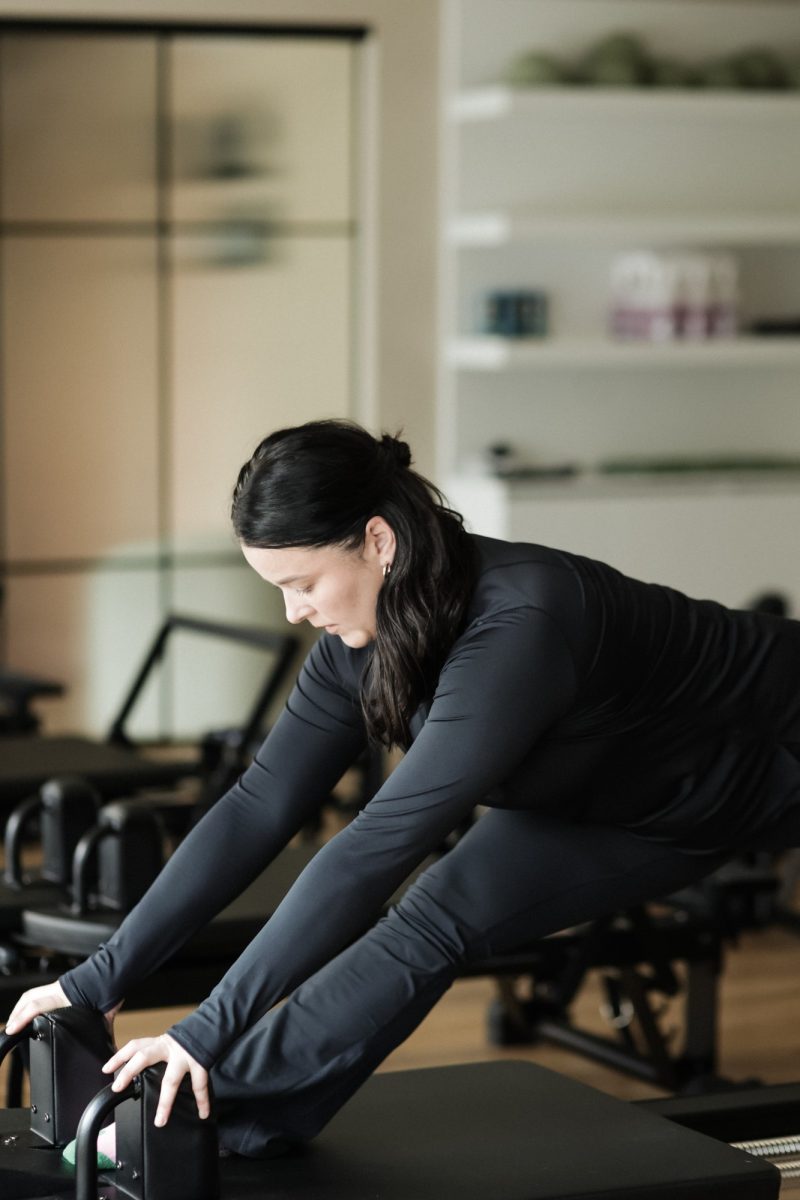
STOTT PILATES® and physiotherapy – more than a standard workout
Pilates is not just abdominal exercises. It is purposeful work with the whole body: its stability, strength, mobility, coordination, balance and movement control.
In my sessions the STOTT PILATES® method is combined with physiotherapy knowledge and clinical experience. That is why I do not choose exercises from a fixed sequence, but according to the person's body, abilities, goals and tolerance of load.
Why STOTT PILATES®?
STOTT PILATES® is a contemporary direction of the Pilates method, built on anatomy, biomechanics and modern exercise principles. Particular attention is paid to:
- breathing;
- pelvic and lumbar stability;
- rib cage placement;
- scapular movement and stabilisation;
- head and cervical placement;
- correct movement mechanics and control.
This is not merely teaching "correct posture". The goal is to learn to control the body better during movement, keeping the necessary stability while preserving freedom of movement.
Why physiotherapy matters in my sessions
I am not only a STOTT PILATES® instructor, but also a physiotherapist with more than 10 years of clinical and rehabilitation experience.
So before choosing exercises I assess not only what you want to achieve, but also how you move today. I assess:
- movement control;
- muscle strength and endurance;
- mobility;
- balance;
- posture and movement strategies;
- previous injuries and their consequences;
- physical readiness;
- goals and the ability to tolerate physical load.
Two people may have the same diagnosis or a similar complaint, yet their movement strategies, strength, mobility and load tolerance can be completely different.
My principle is not to treat a diagnosis, but to train the person's function.
What does Pilates do for the body?
Regular, well chosen Pilates sessions can help to:
Strengthen the body
Develop the strength and endurance of the trunk, hips, shoulder girdle and other muscles.
Improve movement control
Learn to coordinate the movement of body segments more precisely and perform exercises more efficiently.
Improve mobility and flexibility
Move through a larger range where it is lacking, while keeping the necessary control.
Improve balance and coordination
Train the body's ability to stay stable when changing position, support or direction of movement.
Strengthen trunk and pelvic stability
Improve the ability to control the position of the spine and pelvis during various movements.
Improve body awareness
Feel your position in space, your breathing, the range of movement and the work of your muscles more clearly.
Help manage some types of pain
Pilates is one form of active exercise therapy whose benefit has been studied especially in chronic non-specific low back pain. Research shows possible improvement in pain and function, although Pilates is not the only effective form of physical activity.
Maintain physical capacity with age
Regular movement helps to maintain strength, flexibility, balance and everyday function. In studies Pilates has been associated with better balance, strength, flexibility and functional capacity in older age.
Not only the Reformer
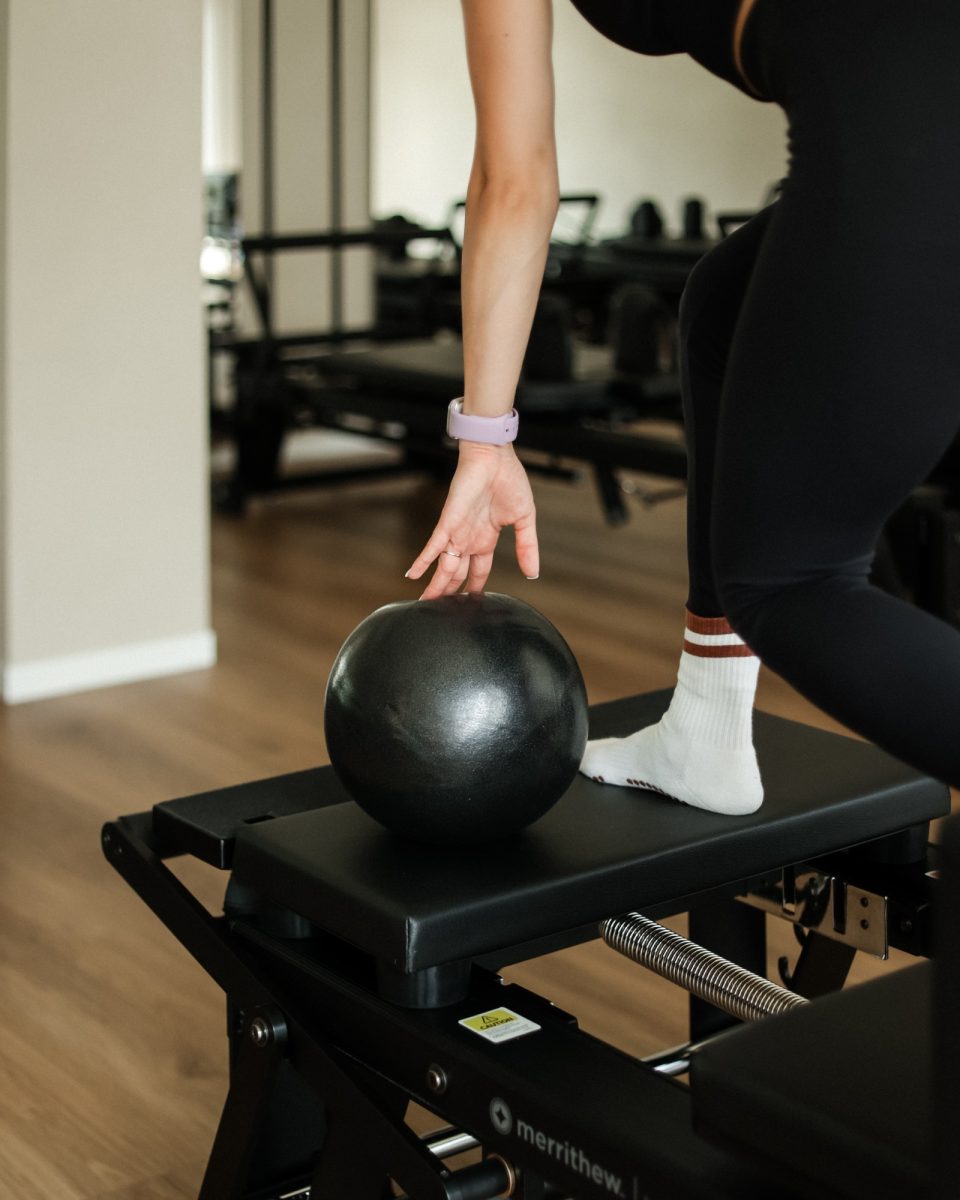
Although the Reformer is an excellent tool, my work with Pilates is not limited to it. Depending on the person's needs, I use:
- Reformer
- Stability Chair
- Cadillac
- Barrels
- small equipment
Different equipment makes it possible to change support, resistance, range of movement and the difficulty of an exercise. So my principle is simple:
I choose not a machine, but the tool that suits the person best.
In the STOTT PILATES® method it is exactly the modifications and exercises of different difficulty that make it possible to adapt the work to different body types, abilities and levels of fitness.
Who is it for?
Pilates may suit:
- people with sedentary work who move little;
- those who want to return to physical activity safely;
- people after rehabilitation, when a more active load can be started;
- those who feel movement restrictions or some musculoskeletal pain;
- those who want to improve movement control, mobility and stability;
- physically active people who want better body control;
- athletes for whom movement efficiency and physical readiness matter.
If there is acute pain, a recent injury, surgery or another medical condition, the type of training must be agreed individually and, when needed, with the recommendations of a doctor or another healthcare specialist.
Pilates and strength training are not competitors
Pilates and strength training do different but complementary work. Pilates gives much attention to movement control, stability, coordination, mobility and body awareness. Strength training makes it possible to systematically increase muscle strength, muscle mass and the ability to tolerate higher physical loads.
So for long-term physical capacity it is often worth combining both.
My goal is not to make you better at performing a Pilates exercise. My goal is for you to control your body better, to be stronger and more mobile, and to be able to do more in everyday life and in sport.
My working principle
Assess → adapt → dose → progress.
Book a session
Fill in the booking form or call.